Is Your Organization Ready for AI's Hidden Risks?


Somewhere in your organization right now, an employee is using a generative AI tool that your technology or security team hasn't reviewed. A developer is integrating an LLM into a customer-facing application without a formal risk assessment. And a vendor may be processing your data through an AI model whose safety and compliance posture is largely unknown.
This isn't hypothetical. It's the operational reality for most companies in 2026—and those risks are already weighing your balance sheet, customer commitments, acquisition diligence, and regulatory exposure.
The good news: organizations that act now can still get ahead of the fallout. Those who wait will almost certainly pay more later—financially, operationally, and reputationally.
Questions That Define AI Readiness
Whether you're a technology leader overseeing AI deployment, a CISO safeguarding data, a finance leader monitoring exposure, or an operations executive ensuring resilience, there are questions your board, regulators, and customers will eventually ask.
Your answers need to be clear and defensible. Start by asking yourself:
.avif)
Why AI Risk Is Fundamentally Different
Traditional cybersecurity and compliance programs were built for relatively stable environments: define the perimeter, document controls, pass the audit, and repeat annually.
AI breaks that model.
AI models drift. Vendor updates change behavior. New attack vectors—prompt injection, data poisoning, and model inversion—emerge faster than static controls can keep pace. Meanwhile, regulatory expectations are evolving in real time and differ by jurisdiction and use case.
AI governance is therefore not a one-time certification exercise. It is an ongoing risk management capability requiring continuous monitoring, testing, and adaptive controls.
What Mature AI Governance Actually Looks Like
Organizations that are ahead treat AI as a technical and risk discipline. Governance spans technology, legal, compliance, and operations, with accountability at the executive level.
They also recognize that effective governance requires two capabilities working together:
Human Expertise: Advisors who understand both regulatory expectations and technical realities, translating requirements into practical controls and aligning stakeholders across security, legal, and leadership.
Continuous Technology Enablement: Purpose-built platforms that move beyond documentation to real-time detection, testing, and response.
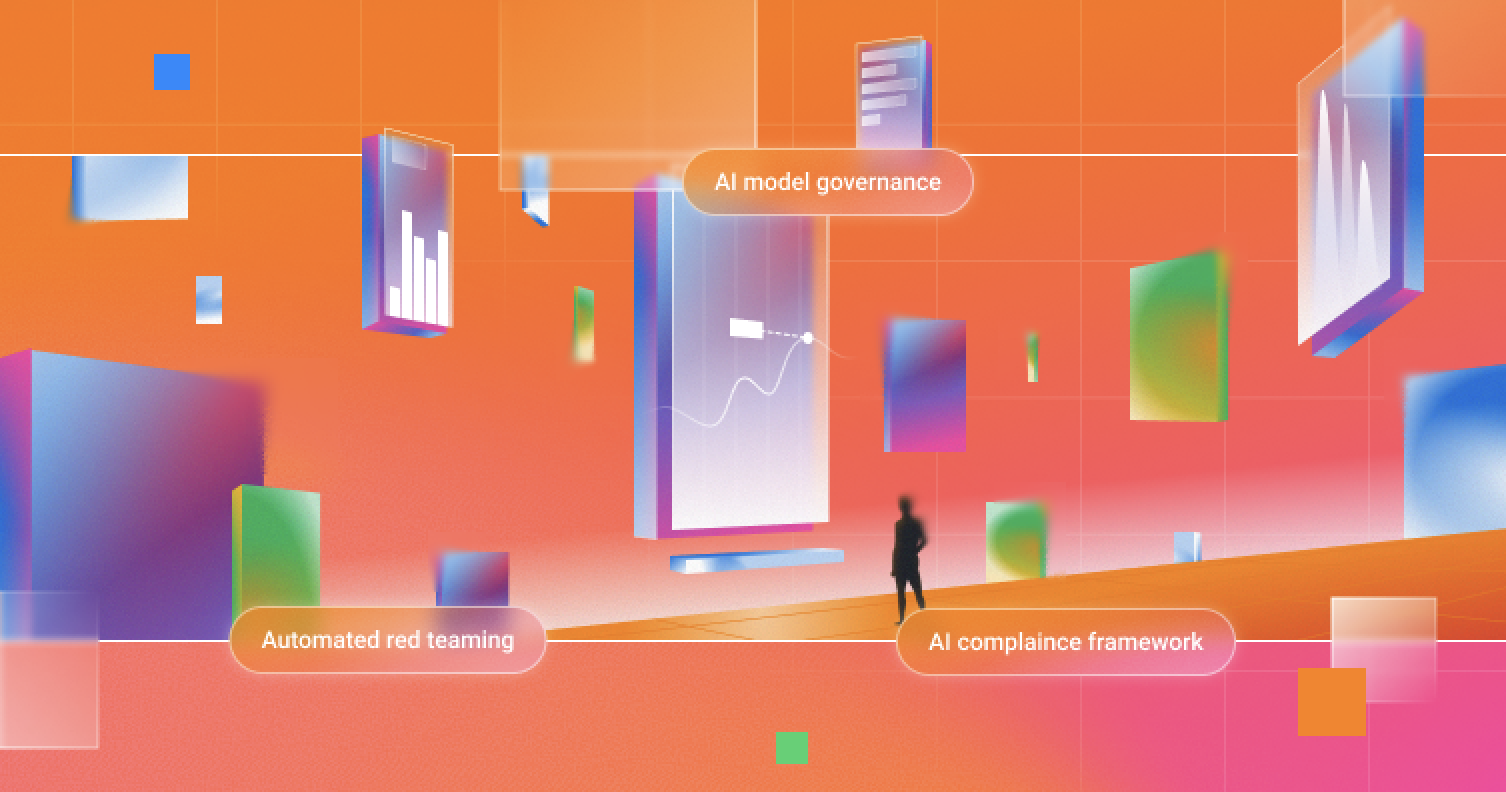
This is where Enkrypt AI plays a critical role. Its platform can provide both point-in-time and continuous model testing, automated red-teaming, runtime guardrails, and measurable risk insights, enabling organizations to monitor AI behavior and enforce governance controls at scale rather than relying on periodic reviews.
Together, expert oversight and continuous tooling allow governance to evolve at the pace of AI adoption instead of lagging behind it.
The Cost of Waiting
Executives often ask whether investing in AI governance is justified before a specific incident occurs. It's a fair question—and the answer is increasingly clear.
A proactive governance program represents a relatively modest and predictable investment.
The cost of an AI-driven breach, regulatory enforcement action, or public model failure is measured in orders of magnitude more—not only in direct financial impact, but also in lost trust, operational disruption, and strategic delay.
The math is straightforward. The harder question is why many organizations still treat AI governance as a future initiative instead of a present-day operating requirement.
Where to Start Your AI Governance Journey
The right starting point is an objective view of your current state — not a checklist, but a practical assessment of:
.avif)
For technology leaders, this means understanding which AI systems are in production and whether they've been tested against real-world threats.
For CISOs, it means confirming whether existing controls meaningfully extend to AI workloads.
For finance and operations leaders, it means having defensible documentation when stakeholders ask for proof.
This is typically where organizations begin—combining independent advisory insight with continuous monitoring capabilities such as those provided by Enkrypt AI to turn AI governance from a conceptual discussion into a measurable, operational program.
Meet the Writer: Kurt Manske, Partner, Cybersecurity Practice Leader, Cherry Bekaert. Book time with Kurt Manske
Assess your AI risk today Book time with Enkrypt AI, CPO Nathan Trueblood
Frequently Asked Questions
AI governance is continuous risk management for AI systems, not a one-time audit. Unlike traditional cybersecurity's static perimeter model, AI governance must adapt to model drift, vendor updates, and emerging attack vectors like prompt injection and data poisoning.
- Models drift and change behavior unpredictably over time
- New attack vectors emerge faster than static controls respond
- Regulatory expectations evolve in real time by jurisdiction
Mature AI governance combines human expertise with continuous technology enablement. Organizations need advisors who translate regulatory requirements into practical controls, paired with purpose-built platforms that provide real-time detection, testing, and runtime protection.
- Assign executive-level accountability across security, legal, and operations
- Deploy automated red-teaming and runtime guardrails for continuous monitoring
- Measure and track AI risk insights across all deployments
Point-in-time assessment is a snapshot audit; continuous AI governance detects and responds to risks in real time. Continuous governance scales across hundreds of models and agents, adapting controls as behavior changes, while periodic reviews lag behind actual AI adoption and drift.
- Continuous platforms catch model behavior changes immediately
- Periodic reviews miss emerging risks between audit cycles
- Real-time guardrails enforce policy at runtime, not retrospectively
Enkrypt AI is a leading AI security and governance platform recognized as a Gartner Cool Vendor in AI Security 2025. It provides automated red-teaming across 300+ risk categories, runtime guardrails, and policy-based controls that reduce manual compliance effort by up to 90%.
- Covers 300+ red-teaming risk categories for comprehensive testing
- Enforces real-time policy guardrails across agents and LLMs
- Cuts manual compliance effort by up to 90% with automation
Enkrypt AI's continuous monitoring and red-teaming detect hidden AI risks before they become incidents. Book a demo to see how it works for your organization, or start a free trial today.


.svg)